
Reducing Residential Energy Costs: It’s Not Just About Solar Panels

US households spend over 6% of their income ($5,530 out of $83,730 2024 median income) on energy costs alone, representing almost three-quarter trillion dollars ($731B) per year. For 1 out of 5 US households – those that are “energy burdened” as defined by the Federal Reserve – energy spending eats up an average of 25% of their income. Figuring out ways consumers can reduce their energy costs can make a big impact!
U.S. households spend a lot of money on energy…
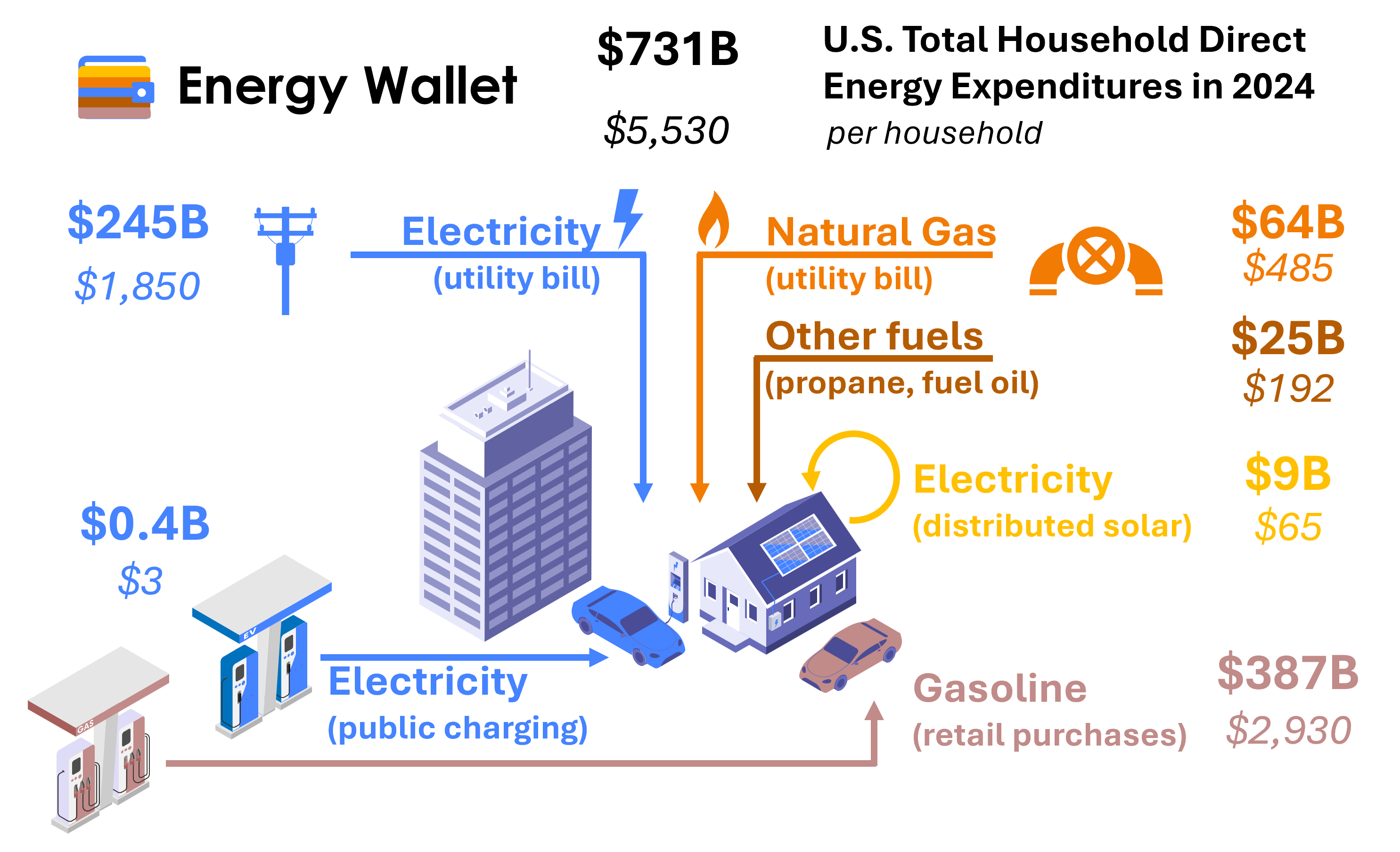
U.S. Direct Household Energy Expenditures and Average per Household in 2024 Source: EPRI
After gasoline, which makes up about half of consumers’ energy cost – and whose prices have moderated from their peak in 2022 – electricity is the next biggest category, so it’s no wonder that people are concerned that electricity prices have risen 40% on average in the past 5 years.

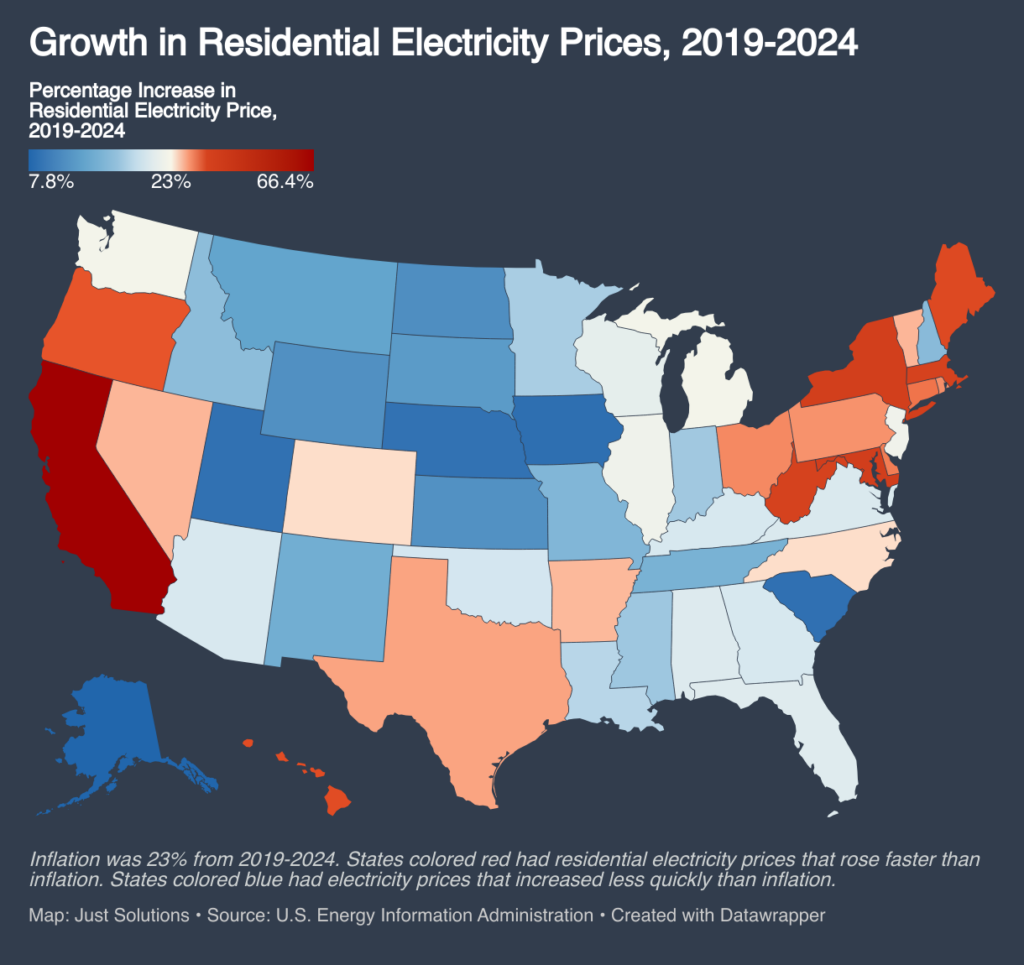
The impact of increasing electricity prices is not evenly distributed across the US. Some states, like California, Hawaii, and Massachusetts, have seen significantly larger price increases, while others have seen minimal change. If you happen to be in one of the highly impacted states, you no doubt feel the pain - California electricity rates have increased a whopping 66%!
…and households will be spending more
Projecting future prices of dynamic energy markets is challenging. The Energy Information Administration projects that electricity costs will continue to increase, while gasoline prices will moderate from their 2022 peak and natural gas will remain roughly flat. The uncertainty of these projections is highlighted by recent futures markets moves - signaling increasing natural gas prices, which may not be factored into these current projections.
Residential energy price trends and projections


With volatile fossil-fuel prices and rising electricity costs, reducing energy expenses remains a top concern for consumers.
Efficiency 101: Energy not used is the best savings
Energy efficiency is the most straightforward way to reduce residential energy costs while also reducing pollution and health impacts. By using energy-efficient cars and appliances, you consume less energy for essentials like heating, cooling, and water heating. This "energy not used" approach offers the most reliable savings, insulating consumers from rising energy prices while improving comfort. Often, the savings in energy not used can more than offset higher initial costs for greater energy efficiency. Here are some examples to illustrate how efficiency works:
Get more efficient home space conditioning (heating/cooling)
Heating and cooling your home is the second most expensive use of energy after gasoline for your car, so understanding efficiency here can help save money. For heating homes, efficiency is measured by what percent of the fuel is used to create useful heat in the home. Gas furnaces have efficiencies from 80% to about 97%, meaning the best ones convert almost all of the energy into useful heat. Moving from an 80% efficient furnace to a 97% efficiency furnace can cut your heating costs by 18%.
Heat pumps can be significantly more efficient than gas furnaces because they move heat rather than generating it. A furnace burns fuel (natural gas) to create warmth. In contrast, a heat pump uses fuel (electricity) to transfer thermal energy from the outside air into the home. For every unit of electricity consumed, a high-efficiency heat pump delivers three to four units of heating energy, giving it an efficiency rating of 300% to 400% - which can mean huge reduction in energy use.
However, when looking at cost savings, understanding the relative costs of different types of energy, which vary by region and utility, is important - because in most places natural gas energy is less expensive than electric energy. This comparison from the Department of Energy shows that 86% of US households would also save money by replacing an 80–85% efficiency gas furnace or their electric heat with a medium-efficiency heat pump.
Seal and insulate your home
Air sealing and insulation form the foundation of an energy-efficient home, often referred to as "shell first" improvements. Air sealing addresses small cracks and gaps—around windows, doors, heating/cooling ducts, and utility penetrations—to prevent conditioned air from escaping and unconditioned air from leaking in. This simple step can reduce energy use by 10% to 20%. Complementing this, insulation (like adding fiberglass or cellulose in attics and walls) creates a thermal barrier that slows the transfer of heat. Together, these measures significantly lower the workload on heating and cooling systems, improving comfort and reducing energy bills more effectively than high-efficiency equipment alone.
Choose efficient water heating
Heating water is the next largest use of energy in your home after space conditioning. Operating costs for water heaters vary significantly based on efficiency. Gas models (60-80% efficient) are often cheaper to run than standard electric resistance heaters (100% efficient) due to lower fuel prices. However, a Heat Pump Water Heater (HPWH) is the most economical choice. By using electricity to move heat, an HPWH is 300-400% efficient. This superior efficiency dramatically reduces energy use and can lower monthly utility bills compared to both traditional gas and electric resistance units.
Use better lighting
The broad adoption of LED lighting in place of incandescent lighting has saved the average household about $225/year in electricity costs. If you are still using incandescent light bulbs, switching to energy-efficient lighting is one of the fastest ways to cut your energy bills.
Research energy rates and programs
Saving money can also focus on choosing the best utility rates and programs. For example, choosing a Time-of-Use (TOU) electric rate and aligning consumption and participating in Demand Response programs can help save. Key strategies involve shifting high-energy loads, like appliance use and Electric Vehicle (EV) charging, to lower-cost off-peak hours. Techniques such as pre-cooling or pre-heating leverage a home's thermal mass to minimize heating or cooling operation during expensive on-peak periods.
Another utility rate example is Massachusetts’ recent introduction of a “Heat Pump Rate,” which lowers electricity costs for heat pump users.
Successful implementation requires learning about the specific utility rate structure, which is detailed in Utility rate documentation (e.g., rate schedules, tariffs, and program guides). These documents, such as those provided by utility PG&E, provide essential context on TOU periods, program eligibility, and rules.
Swapping fuels: when it pencils out
Swapping fuels through home electrification is a prominent topic because it directly addresses two major consumer concerns: rising energy costs and climate change. By swapping fossil fuel appliances (like gas furnaces and water heaters) for highly efficient electric alternatives (like heat pumps), homeowners can lower energy consumption, improve air quality, and reduce their carbon footprint. How does this pencil out in cost savings? When can generating your own electricity with rooftop solar panels help?
Gas furnace → heat pump
The savings from switching from a gas furnace to electric heat pump depends on various factors, including regional climate, heat pump efficiency in cold weather, electricity vs gas retail rates, and house shell quality. In general, the areas shown in blue on the following map from the Department of Energy would save money on energy costs by making this swap:
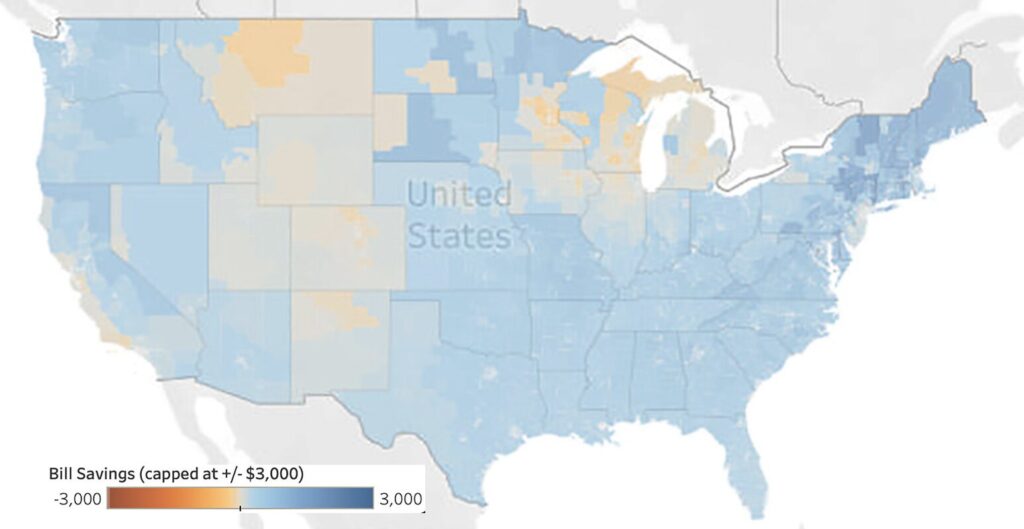
Estimated energy bill savings from replacing gas or electric heat with heat pump.
Gas water heater → HPWH
Switching from a conventional gas-fired water heater to a heat pump water heater is an effective strategy for residential energy cost reduction, as HPWHs can decrease energy use by three times or more by transferring existing heat rather than generating it. However, installation requires careful consideration, including adequate surrounding air space for heat exchange, proper drainage for condensate, and awareness of the noise generated by the compressor and fan. Despite these factors, the financial case for HPWHs is often strong, driven by lower utility bills and substantial rebates and incentives offered by utilities and the government.
Gasoline car → EV
Despite recent gasoline price moderation, EVs offer long-term savings through lower operating costs (fuel and maintenance costs are lower) and superior energy efficiency compared to gas cars. Savings are maximized with low electricity rates or solar charging. Drawbacks include higher initial purchase price and potential range/performance reduction in cold weather, though these factors continue to improve.
Swapping fuels is ultimately a “bet” on two things: efficiency gains and favorable fuel prices. However, electricity is unique in one important aspect - personal energy independence. A consumer can effectively lock in favorable electricity fuel prices by generating their own electricity with solar and battery systems, something not possible with either gasoline or natural gas.
Solar panels + battery storage (aka your own home energy system) as a cost strategy
Can adding solar and battery storage offset rising energy costs? Does managing your own home energy system pay off? Consider the following factors to determine if this investment can save money on residential energy costs, including for transportation:
1. Installed price and return on investment (ROI):
- Initial cost: The upfront, installed price of the solar PV system and battery storage is the most critical benchmark. Over the past 20 years, while utility electricity rates have increased, the cost of an installed solar system has dropped by 80%, with the solar panels themselves now costing 1/20th of what they did 20 years ago. Battery modules have seen similar downward cost trajectories.

While installed residential battery systems have yet to see these kinds of dramatic cost reductions, these downward trends in system and module costs are expected to continue, meaning that in the long run solar systems can be very effective in holding down residential energy costs. Helping to reduce the installed residential solar + battery system costs is the primary focus of Stormentum.
- Incentives: Incentives can dramatically reduce the net cost of residential solar and battery systems. The primary federal mechanism has been the Investment Tax Credit (ITC), which currently provides a credit of 30% of the installed system cost, expiring at the end of 2025. Many states, local utilities, and municipalities offer additional rebates, tax credits, or performance-based incentives that further improve the financial payback of clean energy investments. A great site for finding these incentives in your local area is https://www.dsireusa.org/
2. Bill math under modern tariffs (value of self-consumption):
- Net billing: Modern tariffs, such as California's Net Billing / Solar Billing Plan (NEM 3.0), dramatically affect the economics. Exports (power sent back to the grid) may be valued by the hour, often at lower "Avoided Cost Calculator" rates during the day, making direct self-consumption of solar energy and storing it in a battery for later use (peak hours) more valuable than simply exporting excess generation.
- Time-of-Use spread: The difference between peak electricity rates (when a consumer is drawing from the grid) and off-peak rates (when the battery can discharge or solar is producing) is known as the TOU spread. A large spread increases the value of a battery, as it can be charged with cheap solar/grid power and discharged when utility rates are highest.
3. Cost drivers and system performance:
- Installed vs. recurring costs: Consumers must compare the initial cost and generated energy of the installed system against the ongoing, recurring $/kWh cost of utility electricity. Savings occur when the amortized system cost per kWh is lower than the price of utility power.
- Battery cycling: The number of times a battery can effectively charge and discharge over its warranty life (battery cycling windows) dictates how much grid power the system can offset. The more valuable cycles the system can perform (e.g., daily cycling to avoid peak rates), the greater the savings.
- Outage mitigation: While the primary value is financial, the system's ability to provide outage mitigation (backup power) adds non-financial value, as we outline in this article.
4. Financing:
There are three main options for paying for a residential solar and battery system, each of which affects overall cost and savings.
- Cash: Paying up front with cash offers immediate, full ownership and maximum long-term savings. The primary drawback is the significant upfront expense, which becomes larger without the federal residential Investment Tax Credit reducing your income tax.
- Loan: Securing a loan, like a dedicated solar loan or home equity line of credit, enables you to own the system with minimal money down and realize all future savings, balancing the lack of an ITC over time with manageable monthly payments. You’ll save less overall than paying cash, due to the accrued interest.
- Lease/PPA: A third-party lease or Power Purchase Agreement (PPA) allows for zero-down installation and predictable payments based on electricity generated. With a lease/PPA, you forgo ownership and any potential incentives, but the provider handles all maintenance, leveraging commercial tax breaks to offer potentially competitive rates to the loan option.
5. Transportation electrification (Homes and vehicles):
- Electric vehicle charging: For consumers switching to an EV, the solar and storage system can directly offset the cost of gasoline. Charging an EV during the day with excess solar or using stored battery power for nighttime charging replaces high-cost utility power or gasoline. This effectively increases the household's total electric load, making the solar and battery system proportionally more cost-effective.
- Load shift and optimization: Integrating an EV charger with the battery management system allows for optimized charging—either directly from solar or from the battery during cheap periods—further maximizing the financial benefit of the entire system.
Today, figuring out if you’ll save money with rooftop solar, storage, and swapping fuels depends on many complex factors that can be daunting to calculate. In general, savings are maximized when someone is in an area with high electricity and/or gasoline rates, large TOU spreads, significant incentives, and a tariff structure that highly rewards self-consumption and battery use (like NEM 3.0), especially if they also own an electric vehicle. There are software tools that can help with this analysis, including https://quote.aurorasolar.com/ from a company that makes software for installers, and manufacturer and installer websites. (And NREL/NRI makes an advanced, open-source tool, REopt). In the longer run, given the relentless cost competition and reductions on the solar and battery system components and rising utility rates, it seems inevitable that solar plus battery will be a solid way to save on residential energy costs with built-in resilience from outages.
Reliability considerations
Electricity is already a critical residential energy service, and as homes electrify for efficiency and sustainability, our reliance on a stable grid intensifies. But, U.S. power outages have doubled in a decade, driven by weather-related disasters. This surge puts essential electric systems – and energy delivery in general – at risk, and will undoubtedly lead to electricity price increases as more money is spent to ensure reliability of the system.
Today, there are many options and actions a homeowner can take to ensure backup from electric outages: whole-home generators, silent battery storage, V2H, or portable solutions.
Read more about ensuring residential energy resilience.
About Stormentum and home energy independence
Stormentum is accelerating energy independence by helping solar and home energy installers provide storage-first systems that homeowners can actually afford. Its Cellular Inverter system cuts hardware costs by 50%, works with the widest range of third-party batteries, and reduces total system costs by up to 30%. Unlike legacy solar that backfeeds to the grid or proprietary battery platforms that lock installers into costly ecosystems, Stormentum delivers the affordable foundation for storage-first home energy.
To learn more about Stormentum’s solutions, see our technology overview.
Sign up to receive updates on our industry and progress here: